Thursday, April 29, 2021

Poem In Your Pocket

It's Poem-in-Your-Pocket Day! (I wonder why it's so late this year--one of the most fun parts of National Poetry Month should be earlier in the month, I think.) It's hard to celebrate this year, as I'm going nowhere (maybe I'll get some takeout for dinner, but I still won't leave my car) and, also, my pants don't have pockets. Still, I can at least post some poems here!

I don't know that I've found a poem in The Best American Poetry 2020 that I'd pocket. (Julian Gewirtz' "To X (Written On This Device You Made") is too long.) I realized I hadn't yet posted a cover pic of the collection, though, and thought this was a good opportunity to do so. Fencers are always cool, right? 

One of my favorite poems to use as a pocket poem is Yehuda Amichai's "The Ballad of the Washed Hair." (I think Lilith is using Chana Bloch's translation, but I'm not sure.) I don't why exactly I find this poem so compelling. I do like long hair. There's the mix of the personal and the historical, the mundane and the mythical. The girl is objectified (or at least eroticized) but she's also powerful, and not just in terms of sex appeal. (It's a rare example of a positive Delilah figure.) I love "The scent of her drying hair/is prophesying in the streets and among stars." There's a blend of melancholy and hope. It's also a good pocket poem because it's relatively short. I wonder, though, how much of the poem's resonance comes from that final image. What will readers for whom telephone books were never a daily reality think of the poem--would the ending seem flat to Eliot? What will Bernadette or Edie think if they read this poem as young women? (And how will awareness of events and realities in the Middle East color future readings? This is one of Amichai's less political poems, but I always carry an awareness of him as an Israeli poet.)

Ha, I've linked to this poem at Lilith before and never read the others in the "Hair and Desire" feature. "I'm Letting It Grow" by Nancy Blotter is pretty fun.

If I had pockets, I could pocket some of the poems I mentioned in my Tree Poems post.

If I was going to pocket a recent poetic read, it would be something from Lucy Biederman's The Walmart Book of the Dead. (The publisher calls it "experimental fiction"; they're prose poems to me.) I came across this book in one of those authors-recommend-books-by-other-authors articles (I think this one was by Kiley Reid of the intense Such a Fun Age), and I knew I had to read it. That juxtaposition of the mundane and the mythic that I appreciate in "Ballad of the Washed Hair"? It's here on steroids: the cosmic and the commonplace. Titles and subjects are inspired by The Egyptian Book of the Dead, but the details, characters, and scenarios are drawn from contemporary American Walmart and Walmart patrons. There's humour and absurdity, but it's generally not at the characters' expense; these are, indeed, life and death issues at play in the Walmart setting, and they deserve the attention. You can see an example, the "SPELL for Making One Not Have to Work in the Gods' Domain" here. It's actually not my favorite from the book, partly because there's less of the juxtaposition with language from the Papyrus of Ani and partly because I feel the portrait of this individual is a little more negative/less empathetic than most others in the book.

"ROLL of Gods," for example, uses more of that antiquated language, along with some very relatable humour:

O broad gods of the hall of truth, I have ascended unto you, I am among you, here, I live on truth, truth like you, and I know your names--

O patron of the only independent bookstore in a two-hundred-mile radius, I have not wasted my time. ...

O invader of Iraq, who came forth from the boardroom, I have not worn someone else's boots. ...

O grocery store cheque writer, who made longer the endless line, who came forth from the gods' domain, I have not rammed my cart against the cart in front of it, creating a riot. ...

"SPELL to Enter Through the Gates of Night" demonstrates a perhaps radical empathy:

 ...ILLUSTRATION: The part of the wall that holds the guns in Walmart throbs, as if lit differently than anything else on earth, constructed from different particles. People on the other side don't understand. Either that, or they turn away, fearing that, in their heart of hearts, they do. ... A weightlifter since high school, he hadn't know anything could be so heavy until he held a gun for the first time. It was a Sig Sauer--just a simple, double action handgun, it hadn't even been loaded. He felt the desire to die when he held it, and, buzzing right alongside that desire, the means to do so. And when he pulled himself back from choosing to use it like that, the choice he had made felt as physical a thing as pulling a hood from his head. ...

If I was making a pocket pick, it might be "SPELL for Hopefulness in the Gods' Domain," about a Walmart security officer. "Initially, he was hesitant to accept this job, but not because he thought it might involve becoming a father-figure-type to a bunch of kids whose families live in cars. If he had known that all this extra emotional stuff would be involved, he never would have taken the job." It's tragicomic.

Wednesday, April 28, 2021

Under the Radar

Man, I got sucked in by Biden's speech and almost forgot to post today. (Not bad, but I think I coulda stuck with Googling the transcript tomorrow. I'd give it a B+ and I'll upgrade that to an A if any of those major pieces of legislation pass in the next two months.) No longer in the mood for writing up anything lengthy.

I've read and reviewed a number of YA novels here. Most of them seem to have gotten a fair amount of fanfare (blog tours, social media mentions, banner ads on book websites, strategic Listicle placement, etc.), but I've encountered a few that seemed to slip largely under the radar. Two of those are Isle of Blood and Stone and Song of the Abyss by Makiia Lucier. Sure, there are some things about these books that are formulaic, but like a good rock song, sometimes all you want is a formula well executed. And, in fact, these books do also put some variation into the formula.

The fantasy world of Isle of Blood and Stone seemed reminiscent of Portugal in the Age of Explorers, with a nobility invested in trade, seafaring, and map-making. The writer is from Guam, and I suspect aspects of that heritage make their way into the worldbuilding of the island kingdom of St. John del Mar (although I really don't know enough about the history of Guam--I didn't even know it was colonized by Spain until I Googled after reading this series.)The book follows two young nobles--Elias, whose mapmaker father was killed years ago when the two heirs to throne were abducted and murdered, and Mercedes, an orphaned noblewoman of mixed ancestry who currently serves as diplomat and spy. When a map with a hidden riddle is discovered, it raises questions: could Elias' father and the lost princes be alive after all? who was really behind the abduction, and is there a traitor in the palace?

Sure, there are tropes, including it sometimes stretching the belief that two young nobles, basically alone, are entrusted with the investigations and adventures. (Also, in terms of worldbuilding, there are a few objectionable throw-away details, like a casual reference to cannibalism.) But Lucier does a good job of maintaining tension and keeping up the mystery; though it's fairly obvious there is a traitor, the older adult characters are drawn sympathetically yet leaving room for suspicion (and I had at least one surprise). Elias and Mercedes are likable, and there's a real sense of history to the setting. 

So why doesn't this book get more buzz? Does it fall into a common pattern of writers of color receiving less publisher support than white writers? Did it get a big publisher book but (surely at least somewhat outside the target audience) just missed it? The treachery and the encounter with a leper may be a bit darker than the content of some YA books--but honestly not that much; such an argument would be a real stretch. I don't know why I hadn't heard of it before it showed up in my "you might also like" scrolling, but I found Isle of Blood and Stone to be a refreshingly enjoyable read.

I don't think Song of the Abyss is quite as strong as its predecessor, but given the importance of seafaring to St. John del Mar, it's nice to have a book that gives us a voyage. There's a time jump, so Song follows a minor character from Isle, now grown up and an aspiring mapmaker herself. There's piracy, diplomacy, and a journey to a mysterious distant land (which evokes China, including a fantasy take on the terra cotta army). It's also a lot of fun!


Tuesday, April 27, 2021

Literati

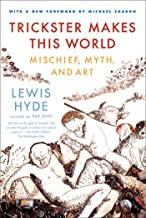
I'm usually a serial monogamist as a reader, but I do often make an exception for nonfiction, taking slower read of a nonfiction tome, coming to it intermittently between novels. My nonfiction this month has been Trickster Makes This World by Lewis Hyde (and, in fact, I thought I'd have gotten further with it before now because the Trickster subject matter really appeals to me; I think I've just had some especially quick/binge-worthy fiction reads lately keeping me away).

In Trickster, Hyde takes an approach that draws from anthropology, literary and art criticism, biology, psychoanalysis, and more. He discusses the archetype of the trickster, the trickster role in myth, and modern and contemporary artists who have tapped into some of the trickster energy. There's a focus on Hermes, but Coyote and Raven from Native American traditions and Eshu and Legba from West African traditions also get ample discussion. Monkey from Journey to the West gets some mention as do Loki and Krishna. Hyde is a compelling writer, erudite in associations yet employing a conversational, often humorous vernacular.

In the first section of the book, Hyde discusses the Trickster as a figure tied to appetite (yet one who can, in many cases, delay gratification in order to better fulfill more spiritual appetites and desires). Next, he delves into the chaotic aspects of Trickster and the role of chance/accident (and, indeed, change) in maintaining a meaningful existence. This includes discussion of John Cage's aleatoric composition and Yoruba divination practices. Hyde goes on to discuss Trickster in terms of shame, shamelessness, and obscenity, tying him to Jung's shadow. The discussion of shame culture and its disruption includes a focus on the writings of Maxine Hong Kingston, Richard Rodriguez, and Allen Ginsburg. I'm just starting the fourth section on Trickster and the trap of culture, but I'm looking forward to seeing where it goes. 

(I'm also looking forward to the appendices, which include Hyde's own translation of a Homeric hymn and a discussion of trickster and gender. I don't know that I'll fully agree with the latter analysis, but I appreciate that it's there. I'm also intrigued by Hyde's earlier book, The Gift; while Trickster, Hyde discusses the windfall of gift of Hermes/fortune that can disrupt fate and social order (and how art can play this role), he includes a note that The Gift discusses how a gift economy (and the imaginative work of artists) can create a social order. It makes me think of the gift/favour economy described in All Our Kin, a work of anthropology that had a real impact on my thinking. Trickster Makes This World took several years to write and was first published in 1998, so it's dated in some ways while eerily relevant in a few others--just this year, for instance, I've seen it referenced by Tressie McMillan Cottom.)

Trickster Makes This World was a Literati Joseph Campbell book club selection. I've been quite pleased with the book club picks. Although it's not cheap, at $20 a month it's not that much more than buying a full-price book (which is, frankly, not something I do all that often anymore). Some highlights have been the first pick, The Wayfinders, essays by anthropologist Wade Davis; Circe, a novel I'd heard good things about but just hadn't quite picked up until it landed on my doorstep; and The One Hundred Nights of Hero by Isabel Greenberg, a graphic novel that explores storytelling, feminism, and Scheherazade.

And Literati offers me the opportunity to do an unboxing blog post! Here's May's book, which arrived in the mail this week, The Spell of the Sensuous by David Abraham, a nonfiction selection that looks to focus on perception. Although I have to admit, I'm ready for some more fiction, this does look interesting; the chapter titles (such as "Animism and the Alphabet") also intrigue. A quibble, though: there are almost three pages of blurbs in the front of the book, many of them interesting, and 13 of the 16 are from men, only 2 from women. This probably reflects publishing norms in general and not just the author/publishers/readership of this particular book, but it definitely suggests a blind spot. 


Monday, April 26, 2021

A Summoning of Demons

While my thirsty, still unpotted daisies probably wish I had been doing other things, I finished A Summoning of Demons. I appreciate Berg's/Glass' ability to keep tension in a slower-than-thriller-paced book, but I have to admit this one had me feeling teased at points. Enough with half-remembered memories and dreams! Like Livia, a new character in this book, perhaps a fantasy take on Copernicus or Gallileo--I just want some knowledge. I want to know what's up with those sniffers.

Mild spoilers to follow:


As to sniffers, my long-brewing anticipation is satisfied. Their origins are mostly revealed. We learn more--but not everything--about Teo. About Placidio? A few more hints dropped, but his past has yet to be revealed. While some mysteries are (at least partially) resolved, and there's a few turning points for Romy, especially in the final scene, that could suggest the end of a series, it's the mystery of Placidio above all that makes me hope for further Chimera books. Not only do I want to know all the details of his past identity or identities (my read of the clues has me thinking he was born heir to Ricci; does that mean the current Grand Duc is also the son of an islander?), but I'm kind of shipping Romy & Placidio. On the one hand, it could be nice to have a series where romance isn't the primary thing on the female protagonist's mind and doesn't dominate the central relationships ... on the other hand, I'm in camp Romidio. Plomy?

Sunday, April 25, 2021

Just Checking Off a Box

Really not much to write about today. Still reading Cate Glass' A Summoning of Demons. Spent most of the day down the River, mostly hanging in the back cottage despite a few strolls down to the pier. I'd thought the tide might be at the lowest today or tomorrow, but the wind picked up (even if the rain had stopped by the time I woke up), so we didn't see the dramatic lows of Friday and Saturday. After watching a couple of the "fairytale" episodes of The Crown Season 4, Momma and I thought we'd watch something a little lighter and ended up binging the first season of Glow Up, a British reality competition show about aspiring makeup artists. It was fun; I would not have predicted the last three from the early episodes. The judging seemed fair overall despite a couple of major wrong calls (according to me, of course), and it was nice to see both the main judges and especially the guest judges giving supportive if constructive feedback to most of the group most of the time. I was a little worried the finale was going to make me want to boycott future seasons, but I'm content with the winner, so maybe at some point we'll venture into Season 2.


When I got home, Amazon had delivered Hither, Page by Cat Sebastian. I've enjoyed her queer Regency romances, so I anticipate I'll like this one as well, though it's a bit of a departure, being set in postwar Britain. I'll probably work this one into my reading schedule in a couple of weeks, although perhaps I should wait a bit since the next in the series is due out later this year. I think, though, that "late fall" is too long to wait to read a book that advertises itself as "Agatha Christie but make it gay!"

Saturday, April 24, 2021

Followed Through

I finished A Conjuring of Assassins. There were some slow parts, but things sure built to a dramatic finish.

And I finished the journal page I gesso'd last night with a spring tree:


Friday, April 23, 2021

Painting in the Back Cottage

I took the day off & got down to the River quite a bit earlier than usual. It was pretty nippy when I arrived, so I only read on the pier for about 45 minutes (I may have gotten a bit of a red neck, though, despite flipping my cloak up as a scarf). So, I quickly retreated to the back cottage where I unpacked some of my art supplies (mostly from the last few Let's Make Art journal boxes). Instead of starting an LMA project, though, I ended up playing around and doing something original on the page opposite my "AWAKE" journal jam.

I originally thought I'd do something with more layers, maybe a little masking or filling in the face with flesh tones, but I got impatient and also kind of liked my paintbrush outline with the marine acrylic. And after dinner (a great spicy peanut noodles dish supplied by Blue Apron and cooked by Momma), I put down some gesso to dry overnight with an intention to work on the LMA April tree spread tomorrow.

My plan is to paint a spring tree with wisteria (I was thinking of this tree near the 301 Chik-fil-a--the wisteria was already fading after being so bold just a few days before), but we'll see how the actual color mixing and painting go.

My front yard tree at home would also make a cool model for tree branches.