Wednesday, September 1, 2021

30 more posts?

So, Effy Wild has issued another 30 posts in 30 days blogging challenge. As reported here, April's challenge was the first 30-day anything challenge I've ever completed, and I was pretty pleased with that. (In fact, I'm pretty sure I haven't completed a 10-day or a 7-day challenge before, not even that Facebook favorite books thing.) I enjoyed the sense of making progress, even if it didn't quite generate enough excess energy to motivate me to clean the house, weed the yard, and run for fun. Also, I'm convinced that part of the reason I was successful is that I didn't really commit to the challenge, just to the idea of giving it a whirl & seeing what happened. Now that I've done it once, the pressure may be on if I do it again ... Also, the beginning of September is a much busier time of year for me than the beginning of April, between work stuff & family festivities.

Still, I did enjoy that sense of forward momentum. & I'm feeling a bit of positive energy moving into the fall and the new school year. New art projects are being posted online today. I finished part of an overdue project for work. The Labor Day long weekend is getting close. It's beautifully black & stormy here right now, although I know the weather has been far less benign in other places. The news is not good, but stressing about it won't make it better.

So I guess I've talked myself into taking on the challenge. Would I go so far as to say I'm committing too it? Well, let's not go putting labels on things just yet.

This post needs some book talk so it's not just random blathering. I think I'll highlight Drawing Down the Sun by Stephanie Woodfield, which I finished last weekend. It was a recommendation in Effy Wild's Moonshine suited to sunny July and focuses on solar goddesses. I've long been drawn to Thoth who, as a moon god, goes against the gender trend for moon deities. I hadn't realized quite how Greco-Roman (and, eventually, Christian--think of Orthodox art) the sun god myth and the "traditional" gendering of sun and moon are. It surprises me now how I'd never really thought about a sun goddess despite all of my mythological reading.

Some of the goddesses profiled in this book are incontrovertibly sun goddesses, like Norse Sunna and Japan's Amaterasu. With some, there's more (often compelling) interpretation involved, like Brigid with her association with the forge, smithing, and the fires of inspiration.

Woodfield writes that the sun goddess is not just a gender-swapped sun god; her myths are different, one difference being that a common sun goddess theme is the myth of descent, whether of the winter sun or the sun at night. (I certainly can't remember too many myths dealing with the inconstancy of the male sun, even if Apolla/Helios does seem to lend out his chariot an awful lot.) I'm not sure how I feel about this; in some ways, it feels like envisioning a solar goddess is claiming a power that's been withheld and denied to women, and placing that power in a cycle of waxing and waning feels like it diminishes it a bit, ties it back to traditional notions of femininity. But surely part of that reaction is just a resistance to the descent itself. 

Although Inanna is not one of the goddesses featured (Canaanite Shapash is), this book definitely makes me want to revisit how I think of her and the Gilgamesh episode with the Bull of Heaven. The myths where the sun has a sky or storm god for a brother also had me thinking of Coogan's The Old Testament. 

Woodfield acknowledges that her book does not come from the cultural perspective of these goddess' original practitioners: her chapter on Yhi does not aim to give insight into Australian aboriginal spirituality, nor do the sections on Hathor, Sekhmet, and Bast try to recreate historical Egyptian practices. Instead, the chapter on each goddess recounts some of her central myths, gives correspondences and suggestions for spells and ritual work in the context of modern withcraft, and includes a pathworking or meditation to help guide a reader or practitioner to encounter the goddess. Although I love the cover of the self-published version, it's badly in need of proofreading. I assume the Llywelyn edition got a copy edit.

Wednesday, May 5, 2021

Canadian RomCom & American Poetry

I finished Hana Khan Carries On by Uzma Jalaluddin, an enjoyable romance of the "enemies to lovers" variety with two interesting workplace settings--radio and restaurants (in this case, Three Sisters Biryani Poutine, an old-fashioned halal Indian restaurant threatened by a trendy new halal burger bistro and its good-looking rich kid ). Hana Khan helps out at the family restaurant while interning at a local station and trying to break through in radio/podcasting. Though it covers some serious issues (including racist violence and an alt-right protest of diverse communities), the tone and light overall and wears its Austen homage on its sleeve. This is the second recent romance (the first was Spoiler Alert) I've read recently that had the protagonists secretly communicating with each other through anonymous online means--in this case, both characters were unaware of the IRL identities, and while it was nice to not have the power dynamic ickiness of constant deception, the coincidence and the characters' oblivious did strain my credulity.

I also read further in The Best American Poetry 2020. The first poem I read in this batch, "After," by Christopher Kempf, was perhaps the most powerful. It starts out with a description of post-conflict reconciliation (a little awkward, a little staged) that seems like it could apply to more recent conflicts, then adds details and tercets making clear this poem is set during Reconstruction, after the American Civil war. And it is hopeful--it doesn't paint a post-war utopia, but it's set before the height of Jim Crow backlash--with an implicit hope for history to bend again toward justice today.

After,

     the orchards flowered. The fields
breathed out, like a lung. What
     expectation. After, 

... The president
     was alive still. Sherman
hacked the rice coast into acreage. As in

forty, with a mule. Imagine. After, 
     black sheriffs. After, Easter
as emptied shackles. After, 

     at supper, the McDonoughs
of central Pennsylvania looked up
     & watched their sheepdog--gone

two months, a minie bal
     bedded in her foreleg--resplendent
as fable on the porch stesp. The moral--America, 

     good puppy. ....

     
Longstreet--Lee's
hand at Gettysburg, conductor, 

     after, of black militias
in New Orleans--led them,
     armed, against a White League

one would recognize. For which, 
    afterward, no statues
were erected. After, ...

Yusuf Komunyaaka's "The Jungle" joins previous poems in the collection (Johnson's "Fifteen," Jollimore's, "The Garden of Earthly Delights") in focusing on the impact of a particular visual artwork, here a painting by Afro-Cuban artist Wifredo Lam. "I feel that Wifredo Lam's surrealism has chosen me," Komunyaaka writes in his contributor note.

Shara Lessley's "On Faith" uses repetition very much in a "Do Not Go Gently Into That Good Night" mode; she begins, "There is no map for how the apples fall." Steven Kleinman's "Bear" seems sometimes human, sometime not; the poem meditates on mortality ("...did he die/a dignified death, do any of us?"). Nick Lantz' poem addresses mortality and the ephemerality of sound, gaining heft when read in the context of its title, "After a Transcript of the Final Voicemails of 9/11 Victims." He writes that he originally intended to use excerpts from the transcript "but very quickly [he] decided this method felt cheap and flat, so [he] tried to be more associational." In "Quasida to the Statue of Sappho in Mytilini," Khaled Mattawa, whose translation work I admire, juxtaposes the classical art (even if a little clunky) of the statue, evoking Sappho as both poet and exile, with the contemporary refugee crisis, highlighting a situation I was only slightly aware of. 

There's a lyricism to Jennifer Militello's love poem, "The Punishment of One Is the Love Song of Another": "...When my past hissed/with cobras, you let me sleep. When/ I was falling, you brought the ground closer/ and made gravity of flowers like a kiss.." (It's a complicated love.) In "Night of the Living," Susan Leslie Moore writes of the constellations and our place in the universe (after downloading, she reveals in her contributor note, a skytracking app). The tiny lines of Cate Lycurgus' "Locomotion" evoke the spinal cord as she writes on injury and connection to the body. Jennifer L. Knox's "The Gift" begins with a bird's pinfeathers but captures the complicated love, dependence, and resentment between a mother and daughter. In "When I Feel A Whoop Comin' On," Steven Leyva tells a story from his own boyhood. In his note, he writes, "Perhaps we spend our whole lives learning and unlearning the poetics of middle school dances."

Also, I have been super distracted while typing hoping for a visit from a rose-breasted grosbeak. Momma had one at her house yesterday. No sign here so far; I should content myself with my active woodpeckers, titmice, cardinals, and thrashers ...

Tuesday, May 4, 2021

Birthday Books

I wanted to share my birthday haul here--pretty good!!

I may be especially excited about first volume of Marie-Louise von Franz' collected works. I kind of figured that one would be sitting on my wish list for a long while until I gave in and splurged (it wasn't cheap!). And the springy green color for both jacket and actual book cover is much more lovely than it looked on screen. Defekt may be the one I finish first, since I enjoyed Finna and have been wondering where in the multiverse Cipri will go in this next installment.


In other news, I finished The Conductors. I quite enjoyed it, although I think I enjoyed the action bits more than the mystery bits (partly because some of the suspects didn't do that much to distinguish themselves). The wordbuilding, protagonists, and overall characterizations are strong. I'm definitely looking forward to reading The Undertakers, next in the series and out this fall. (And it's pretty cool that Glover's a Virginia author--maybe there'll be some local readings in the post-pandemic future.)

Saturday, May 1, 2021

Happy birthday to me!

Happy May Day! Blessed Beltaine! And, of course, happy birthday to me!

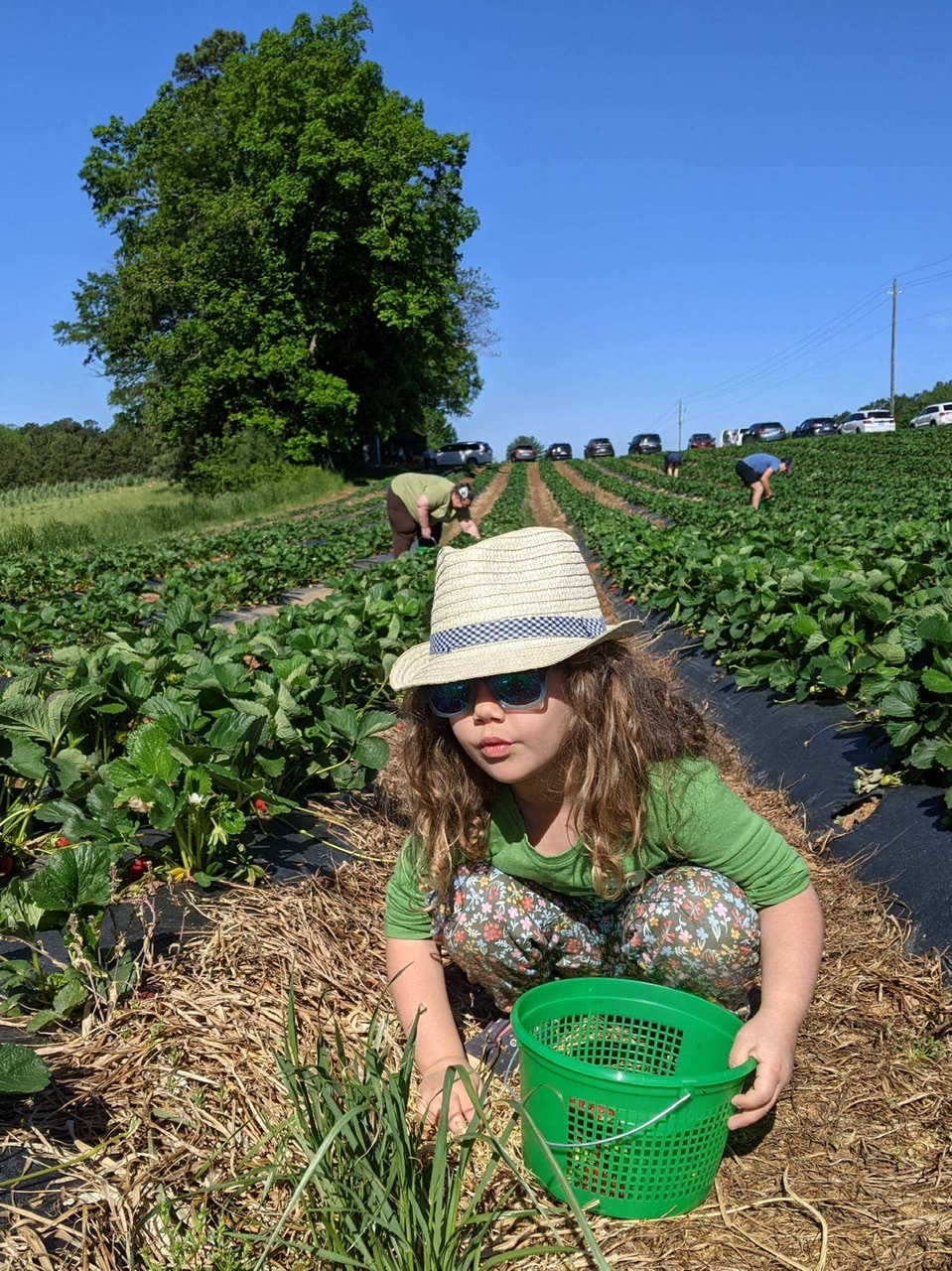
I had a very enjoyable 40th, hanging with the family in Pittsboro, NC. We got off to an appropriately festive start picking strawberries. There were presents (books, watercolors & other art supplies, birthday socks, a painted paperweight from Bernadette, everything green, a very fancy necklace with what is possibly green amethyst as well as blue topaz). We chopped up strawberries to get ready to make jam and bread. We hit the shops in downtown Pittsboro. We ate Cajun chicken while watching the Kentucky derby. (Congratulations, Medina Spirit! Great start, Soup & Sandwich!) We ate chocolate cake with mint chocolate chip ice cream. We drank French 75s while watching The Falcon and the Winter Soldier and The History of Swear Words.


Friday, April 30, 2021

I win!

30 blog posts in 30 days. I succeeded at the Artfully Wild Blog Along! 

I realize that this is not only the first time I've completed any 30-day challenge--not even one day skipped!--it may well be the first time I've completed any do-something-every-day-for-a-limited-duration challenge. On the one hand, keeping it low pressure with totally 0 expectations for quality definitely helped. On the other hand, I imagined if I did persist with this challenge and actually write something every day it might get me in the zone & energize some other projects that need to be written/completed, and on that front ... not so much. Sure, I accomplished (or made moderate forward progress on) some things this month, but there are plenty of other things that are still notably undone.

I finished Educated by Tara Westover last night (or early this morning, actually; those who said it would keep you up reading to find out what's next were right!). It's a very well crafted memoir of a woman who grew up in an abusive, fringey survivalist family, and what happens . There are parts, particularly talking about her early years on the mountain, that actually have a bit of a Laura Ingalls Wilder vibe -- and yet Westover is 5 years younger than me. 

Still reading & enjoying Trickster Makes This World. I'm definitely not finishing Best American Poetry 2020 this month, but I do still plan to finish it. For fiction, I started The Conductors by Nicole Glover, a historical fantasy set in Reconstruction-era Philadelphia. The main characters are magicians, but they're also former slaves and Underground Railroad conductors. (This is another really lovely cover, too.)

I probably won't keep trying to blog every day (there are things I'd rather do, and also things I ought to do), but I may post a bit more frequently. After all, in the last 30 days, I've almost doubled the output of this blog, which has been hypothetically "active" for 13 years. So, I'll close this post by saying:


Congratulations to me!


and

Happy (Early) Beltaine!

Thursday, April 29, 2021

Poem In Your Pocket

It's Poem-in-Your-Pocket Day! (I wonder why it's so late this year--one of the most fun parts of National Poetry Month should be earlier in the month, I think.) It's hard to celebrate this year, as I'm going nowhere (maybe I'll get some takeout for dinner, but I still won't leave my car) and, also, my pants don't have pockets. Still, I can at least post some poems here!

I don't know that I've found a poem in The Best American Poetry 2020 that I'd pocket. (Julian Gewirtz' "To X (Written On This Device You Made") is too long.) I realized I hadn't yet posted a cover pic of the collection, though, and thought this was a good opportunity to do so. Fencers are always cool, right? 

One of my favorite poems to use as a pocket poem is Yehuda Amichai's "The Ballad of the Washed Hair." (I think Lilith is using Chana Bloch's translation, but I'm not sure.) I don't why exactly I find this poem so compelling. I do like long hair. There's the mix of the personal and the historical, the mundane and the mythical. The girl is objectified (or at least eroticized) but she's also powerful, and not just in terms of sex appeal. (It's a rare example of a positive Delilah figure.) I love "The scent of her drying hair/is prophesying in the streets and among stars." There's a blend of melancholy and hope. It's also a good pocket poem because it's relatively short. I wonder, though, how much of the poem's resonance comes from that final image. What will readers for whom telephone books were never a daily reality think of the poem--would the ending seem flat to Eliot? What will Bernadette or Edie think if they read this poem as young women? (And how will awareness of events and realities in the Middle East color future readings? This is one of Amichai's less political poems, but I always carry an awareness of him as an Israeli poet.)

Ha, I've linked to this poem at Lilith before and never read the others in the "Hair and Desire" feature. "I'm Letting It Grow" by Nancy Blotter is pretty fun.

If I had pockets, I could pocket some of the poems I mentioned in my Tree Poems post.

If I was going to pocket a recent poetic read, it would be something from Lucy Biederman's The Walmart Book of the Dead. (The publisher calls it "experimental fiction"; they're prose poems to me.) I came across this book in one of those authors-recommend-books-by-other-authors articles (I think this one was by Kiley Reid of the intense Such a Fun Age), and I knew I had to read it. That juxtaposition of the mundane and the mythic that I appreciate in "Ballad of the Washed Hair"? It's here on steroids: the cosmic and the commonplace. Titles and subjects are inspired by The Egyptian Book of the Dead, but the details, characters, and scenarios are drawn from contemporary American Walmart and Walmart patrons. There's humour and absurdity, but it's generally not at the characters' expense; these are, indeed, life and death issues at play in the Walmart setting, and they deserve the attention. You can see an example, the "SPELL for Making One Not Have to Work in the Gods' Domain" here. It's actually not my favorite from the book, partly because there's less of the juxtaposition with language from the Papyrus of Ani and partly because I feel the portrait of this individual is a little more negative/less empathetic than most others in the book.

"ROLL of Gods," for example, uses more of that antiquated language, along with some very relatable humour:

O broad gods of the hall of truth, I have ascended unto you, I am among you, here, I live on truth, truth like you, and I know your names--

O patron of the only independent bookstore in a two-hundred-mile radius, I have not wasted my time. ...

O invader of Iraq, who came forth from the boardroom, I have not worn someone else's boots. ...

O grocery store cheque writer, who made longer the endless line, who came forth from the gods' domain, I have not rammed my cart against the cart in front of it, creating a riot. ...

"SPELL to Enter Through the Gates of Night" demonstrates a perhaps radical empathy:

 ...ILLUSTRATION: The part of the wall that holds the guns in Walmart throbs, as if lit differently than anything else on earth, constructed from different particles. People on the other side don't understand. Either that, or they turn away, fearing that, in their heart of hearts, they do. ... A weightlifter since high school, he hadn't know anything could be so heavy until he held a gun for the first time. It was a Sig Sauer--just a simple, double action handgun, it hadn't even been loaded. He felt the desire to die when he held it, and, buzzing right alongside that desire, the means to do so. And when he pulled himself back from choosing to use it like that, the choice he had made felt as physical a thing as pulling a hood from his head. ...

If I was making a pocket pick, it might be "SPELL for Hopefulness in the Gods' Domain," about a Walmart security officer. "Initially, he was hesitant to accept this job, but not because he thought it might involve becoming a father-figure-type to a bunch of kids whose families live in cars. If he had known that all this extra emotional stuff would be involved, he never would have taken the job." It's tragicomic.

Wednesday, April 28, 2021

Under the Radar

Man, I got sucked in by Biden's speech and almost forgot to post today. (Not bad, but I think I coulda stuck with Googling the transcript tomorrow. I'd give it a B+ and I'll upgrade that to an A if any of those major pieces of legislation pass in the next two months.) No longer in the mood for writing up anything lengthy.

I've read and reviewed a number of YA novels here. Most of them seem to have gotten a fair amount of fanfare (blog tours, social media mentions, banner ads on book websites, strategic Listicle placement, etc.), but I've encountered a few that seemed to slip largely under the radar. Two of those are Isle of Blood and Stone and Song of the Abyss by Makiia Lucier. Sure, there are some things about these books that are formulaic, but like a good rock song, sometimes all you want is a formula well executed. And, in fact, these books do also put some variation into the formula.

The fantasy world of Isle of Blood and Stone seemed reminiscent of Portugal in the Age of Explorers, with a nobility invested in trade, seafaring, and map-making. The writer is from Guam, and I suspect aspects of that heritage make their way into the worldbuilding of the island kingdom of St. John del Mar (although I really don't know enough about the history of Guam--I didn't even know it was colonized by Spain until I Googled after reading this series.)The book follows two young nobles--Elias, whose mapmaker father was killed years ago when the two heirs to throne were abducted and murdered, and Mercedes, an orphaned noblewoman of mixed ancestry who currently serves as diplomat and spy. When a map with a hidden riddle is discovered, it raises questions: could Elias' father and the lost princes be alive after all? who was really behind the abduction, and is there a traitor in the palace?

Sure, there are tropes, including it sometimes stretching the belief that two young nobles, basically alone, are entrusted with the investigations and adventures. (Also, in terms of worldbuilding, there are a few objectionable throw-away details, like a casual reference to cannibalism.) But Lucier does a good job of maintaining tension and keeping up the mystery; though it's fairly obvious there is a traitor, the older adult characters are drawn sympathetically yet leaving room for suspicion (and I had at least one surprise). Elias and Mercedes are likable, and there's a real sense of history to the setting. 

So why doesn't this book get more buzz? Does it fall into a common pattern of writers of color receiving less publisher support than white writers? Did it get a big publisher book but (surely at least somewhat outside the target audience) just missed it? The treachery and the encounter with a leper may be a bit darker than the content of some YA books--but honestly not that much; such an argument would be a real stretch. I don't know why I hadn't heard of it before it showed up in my "you might also like" scrolling, but I found Isle of Blood and Stone to be a refreshingly enjoyable read.

I don't think Song of the Abyss is quite as strong as its predecessor, but given the importance of seafaring to St. John del Mar, it's nice to have a book that gives us a voyage. There's a time jump, so Song follows a minor character from Isle, now grown up and an aspiring mapmaker herself. There's piracy, diplomacy, and a journey to a mysterious distant land (which evokes China, including a fantasy take on the terra cotta army). It's also a lot of fun!


Tuesday, April 27, 2021

Literati

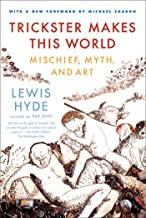
I'm usually a serial monogamist as a reader, but I do often make an exception for nonfiction, taking slower read of a nonfiction tome, coming to it intermittently between novels. My nonfiction this month has been Trickster Makes This World by Lewis Hyde (and, in fact, I thought I'd have gotten further with it before now because the Trickster subject matter really appeals to me; I think I've just had some especially quick/binge-worthy fiction reads lately keeping me away).

In Trickster, Hyde takes an approach that draws from anthropology, literary and art criticism, biology, psychoanalysis, and more. He discusses the archetype of the trickster, the trickster role in myth, and modern and contemporary artists who have tapped into some of the trickster energy. There's a focus on Hermes, but Coyote and Raven from Native American traditions and Eshu and Legba from West African traditions also get ample discussion. Monkey from Journey to the West gets some mention as do Loki and Krishna. Hyde is a compelling writer, erudite in associations yet employing a conversational, often humorous vernacular.

In the first section of the book, Hyde discusses the Trickster as a figure tied to appetite (yet one who can, in many cases, delay gratification in order to better fulfill more spiritual appetites and desires). Next, he delves into the chaotic aspects of Trickster and the role of chance/accident (and, indeed, change) in maintaining a meaningful existence. This includes discussion of John Cage's aleatoric composition and Yoruba divination practices. Hyde goes on to discuss Trickster in terms of shame, shamelessness, and obscenity, tying him to Jung's shadow. The discussion of shame culture and its disruption includes a focus on the writings of Maxine Hong Kingston, Richard Rodriguez, and Allen Ginsburg. I'm just starting the fourth section on Trickster and the trap of culture, but I'm looking forward to seeing where it goes. 

(I'm also looking forward to the appendices, which include Hyde's own translation of a Homeric hymn and a discussion of trickster and gender. I don't know that I'll fully agree with the latter analysis, but I appreciate that it's there. I'm also intrigued by Hyde's earlier book, The Gift; while Trickster, Hyde discusses the windfall of gift of Hermes/fortune that can disrupt fate and social order (and how art can play this role), he includes a note that The Gift discusses how a gift economy (and the imaginative work of artists) can create a social order. It makes me think of the gift/favour economy described in All Our Kin, a work of anthropology that had a real impact on my thinking. Trickster Makes This World took several years to write and was first published in 1998, so it's dated in some ways while eerily relevant in a few others--just this year, for instance, I've seen it referenced by Tressie McMillan Cottom.)

Trickster Makes This World was a Literati Joseph Campbell book club selection. I've been quite pleased with the book club picks. Although it's not cheap, at $20 a month it's not that much more than buying a full-price book (which is, frankly, not something I do all that often anymore). Some highlights have been the first pick, The Wayfinders, essays by anthropologist Wade Davis; Circe, a novel I'd heard good things about but just hadn't quite picked up until it landed on my doorstep; and The One Hundred Nights of Hero by Isabel Greenberg, a graphic novel that explores storytelling, feminism, and Scheherazade.

And Literati offers me the opportunity to do an unboxing blog post! Here's May's book, which arrived in the mail this week, The Spell of the Sensuous by David Abraham, a nonfiction selection that looks to focus on perception. Although I have to admit, I'm ready for some more fiction, this does look interesting; the chapter titles (such as "Animism and the Alphabet") also intrigue. A quibble, though: there are almost three pages of blurbs in the front of the book, many of them interesting, and 13 of the 16 are from men, only 2 from women. This probably reflects publishing norms in general and not just the author/publishers/readership of this particular book, but it definitely suggests a blind spot. 


Monday, April 26, 2021

A Summoning of Demons

While my thirsty, still unpotted daisies probably wish I had been doing other things, I finished A Summoning of Demons. I appreciate Berg's/Glass' ability to keep tension in a slower-than-thriller-paced book, but I have to admit this one had me feeling teased at points. Enough with half-remembered memories and dreams! Like Livia, a new character in this book, perhaps a fantasy take on Copernicus or Gallileo--I just want some knowledge. I want to know what's up with those sniffers.

Mild spoilers to follow:


As to sniffers, my long-brewing anticipation is satisfied. Their origins are mostly revealed. We learn more--but not everything--about Teo. About Placidio? A few more hints dropped, but his past has yet to be revealed. While some mysteries are (at least partially) resolved, and there's a few turning points for Romy, especially in the final scene, that could suggest the end of a series, it's the mystery of Placidio above all that makes me hope for further Chimera books. Not only do I want to know all the details of his past identity or identities (my read of the clues has me thinking he was born heir to Ricci; does that mean the current Grand Duc is also the son of an islander?), but I'm kind of shipping Romy & Placidio. On the one hand, it could be nice to have a series where romance isn't the primary thing on the female protagonist's mind and doesn't dominate the central relationships ... on the other hand, I'm in camp Romidio. Plomy?

Sunday, April 25, 2021

Just Checking Off a Box

Really not much to write about today. Still reading Cate Glass' A Summoning of Demons. Spent most of the day down the River, mostly hanging in the back cottage despite a few strolls down to the pier. I'd thought the tide might be at the lowest today or tomorrow, but the wind picked up (even if the rain had stopped by the time I woke up), so we didn't see the dramatic lows of Friday and Saturday. After watching a couple of the "fairytale" episodes of The Crown Season 4, Momma and I thought we'd watch something a little lighter and ended up binging the first season of Glow Up, a British reality competition show about aspiring makeup artists. It was fun; I would not have predicted the last three from the early episodes. The judging seemed fair overall despite a couple of major wrong calls (according to me, of course), and it was nice to see both the main judges and especially the guest judges giving supportive if constructive feedback to most of the group most of the time. I was a little worried the finale was going to make me want to boycott future seasons, but I'm content with the winner, so maybe at some point we'll venture into Season 2.


When I got home, Amazon had delivered Hither, Page by Cat Sebastian. I've enjoyed her queer Regency romances, so I anticipate I'll like this one as well, though it's a bit of a departure, being set in postwar Britain. I'll probably work this one into my reading schedule in a couple of weeks, although perhaps I should wait a bit since the next in the series is due out later this year. I think, though, that "late fall" is too long to wait to read a book that advertises itself as "Agatha Christie but make it gay!"

Saturday, April 24, 2021

Followed Through

I finished A Conjuring of Assassins. There were some slow parts, but things sure built to a dramatic finish.

And I finished the journal page I gesso'd last night with a spring tree:


Friday, April 23, 2021

Painting in the Back Cottage

I took the day off & got down to the River quite a bit earlier than usual. It was pretty nippy when I arrived, so I only read on the pier for about 45 minutes (I may have gotten a bit of a red neck, though, despite flipping my cloak up as a scarf). So, I quickly retreated to the back cottage where I unpacked some of my art supplies (mostly from the last few Let's Make Art journal boxes). Instead of starting an LMA project, though, I ended up playing around and doing something original on the page opposite my "AWAKE" journal jam.

I originally thought I'd do something with more layers, maybe a little masking or filling in the face with flesh tones, but I got impatient and also kind of liked my paintbrush outline with the marine acrylic. And after dinner (a great spicy peanut noodles dish supplied by Blue Apron and cooked by Momma), I put down some gesso to dry overnight with an intention to work on the LMA April tree spread tomorrow.

My plan is to paint a spring tree with wisteria (I was thinking of this tree near the 301 Chik-fil-a--the wisteria was already fading after being so bold just a few days before), but we'll see how the actual color mixing and painting go.

My front yard tree at home would also make a cool model for tree branches.

Thursday, April 22, 2021

Spring Is In the Air

 We're in that short window of time when things in my yard are actually blooming.


The dogwood and the azaleas around the front oak tree are actually slightly past their peak, though the azaleas next to the house are just getting started. In the shade garden by my side door, the lungwort is still looking good, as is my little Amethyst Ice primrose. There are lily of the valley blooming by the side of the house (although they're supposed to be naturalizing and the only place they seem to want to spread is into the driveway); we'll see if they last 'til May Day. Most of my irises are showing color at the tops of their buds, and they don't seem to be bothered by the current cold-dipping-toward-frost snap. Dracula's Kiss has bloomed.


I'm still reading A Conjuring of Assassins; the only art I've done today is to watch the April lagniappe for Let's Make Art journaling. It's Earth Day, though, so I think a post that's basically just yard pictures counts as appropriate and not slacking. 


Wednesday, April 21, 2021

Chimera Book Two

An Illusion of Thieves wrapped up well, with an ending that would be in acceptable but that fully set up there is more to come. (I suppose I'll avoid spoilers for that last chapter.) In fact, Glass' author bio at the end of the novel does a good job of characterizing the series; Glass, it says, is "a writer of fantasy adventure novels" who "also dabble from time to time in epic fantasy." Indeed, while some of the set-up hinted at in Thieves, especially about the history of the gods and magic, suggested a series that is headed to epic places, the last chapter suggested instead a new caper or adventure--a "next mission" approach rather than a "continuing to develop this story." There's a parallel with TV series that episodic versus serialized. The "next adventure" model leans episodic, but as we know from TV, there's a large ground of semi-serialized, "have your cake and eat it, too" territory. From the opening of A Conjuring of Assassins, Book Two in the Chimera series seems to fall squarely in this semi-serialized bucket. Romy and her accomplishes have accepted the new mission revealed at the end of Thieves, but Romy has also already had a troubling dream that suggests some epic secrets about the origins of magic will be revealed.


Placidio is looking pretty good on that cover. I'm about a quarter into Conjuring, and it's been pretty eventful. I'm not sorry this is a somewhat slower read than my recent batch of romances. I don't need to be reading a book every night. Maybe the Chimera trilogy will even last me through the weekend!

Tuesday, April 20, 2021

Every so often I'll Google (OK, or Amazon search) an author I haven't read anything from in a while, just to check that I haven't missed any new released, or sometimes to let the Algorithm suggest something with a similar mood to me. Not long ago, I searched for Carol Berg and was surprised to see a YA-ish trilogy by Cate Glass cropping up in the results. It turns out Glass is a pen name for Berg, and An Illusion of Thieves, published by Tor, is the first of her new Chimera trilogy. Like other Berg books, the setting is rich (Renaissance-Italy-inspired but with a backdrop of forbidden magic and a historic natural disaster that turned the boot into an archipelago) and you get a real sense of milieu. I'd say the pace is a bit quicker than typical Berg, and the protagonist seems perhaps a bit more worldly. Her situation changes dramatically in the opening scenes, and the book follows her re-establishing herself, then getting drawn into a high-stakes caper. I'm looking forward to seeing how this all turns out, but I'm even more curious about what might come in the sequels--inter-city warfare? religious revival? an artifact-hunting expedition? I'll find out soon. 


Monday, April 19, 2021

The Mermaid, The Witch, & The Sea

Random but notable: It hailed this morning. Emphatically. Hail the size of hominy (smallish hominy, but still).

Relevant to book blogging: The Mermaid, The Witch, And The Sea by Maggie Tokuda-Hall is an enjoyable YA fantasy (with another very lovely cover, this one illustrated by Victo Ngai). It's set in a world ruled by the expanding Nipran Empire (apparently mostly modeled on historical Japan, although there are some elements that suggest Britain's colonial history). Evelyn Hasegawa is the daughter of noble but indebted parents who learns she has been promised in marriage to an Imperial officer and will be a "coffin girl," sent overseas to a colony with her possessions packed in her own coffin. Flora, or Florian, is a reluctant pirate on the Dove, which books passengers in port only to turn slaver at sea. The first part of the book does a good job of establishing Evelyn and Florian as characters and building their relationship, with Evelyn unaware  of the danger she's in. After Flora and Evelyn escape the Dove, the change of setting and storyline at first seems abrupt, but the pieces start to come together as the two learn more about themselves and about those left behind on the Dove. Parts of the final two sections seem rushed, but there is plenty of action and adventure. The book has a unique take on mermaids, and the role of the Sea is well handled.


Sunday, April 18, 2021

Hear Me Roar

OK, still not feeling like a long blog post--though the Bromance books are fun and deserve a write-up (I finished the third, Crazy Stupid Bromance today). Instead, I thought I'd mention something else I've been reading this weekend (besides romance novels and magazines): the guidebook for artist M.J. Cullinane's ROAR oracle card deck. I bought the deck primarily for the art. ROAR is filled with portraits of notable woman--I'm not adding photos here for copyright reasons, but if you're reading this, you should definitely check out the art on Cullinane's website, because it is beautiful. (I don't know exactly how she creates the images, many of them based on photos--digital collage?)

There are familiar figures who drew me to the deck--including authors such as Octavia Butler, Maya Angelou, and Mary Shelley. There's a strong representation of women associated with New Age and spiritualist movements, including Pamela Colman Smith, who I learned just this year was the illustrator and co-designer of the "Rider-Waite" (now often known as "Smith-Waite." or "Waite-Smith" or "Rider-Waite-Smith") tarot deck. Perhaps most intriguing to me are the figures who are new or virtually new to me, like Wild West mail carrier "Stagecoach" Mary Fields; Maud Wagner, first known female tattoist in the U.S.; and Ida Lewis, lighthouse keeper known for her lifesaving rescues (she now has a U.S. Coast Guard cutter for a namesake). 

Saturday, April 17, 2021

Saturday Night Post

Oh, I'm really not in the blogging mood. I'm not necessarily in an anti-blogging mood, though, so it'd be a shame to break my streak. I'm reading the third of a fresh series of romances, which I'll probably write about tomorrow or later next week. My other main reading today was periodicals, including flipping through the latest Eating Well, which apparently ate Cooking Light about a year ago. I'm not wild about the switch (the paper quality has gone done, for instance), although it hasn't been as bad as I feared. This issue isn't packed with too many recipes I'd like to try, although there's an interesting article on ethically sourced spices from Vietnam that includes an intriguing pork satay recipe as well as a roasted potato recipe that looks a little involved (it's basically a much more complicated version of a shake-n-bake) but still yummy. 

Friday, April 16, 2021

Spoiler Alert

I had actually started a novella but just wasn't gelling with its mood, so I started Spoiler Alert. I think this had probably come up in my recommendations before, but I was spurred to order it in part by a positive review from K.J. Dell'Antonia, author of The Chicken Sisters. Spoiler Alert by Olivia Dade is a fangirl romance, much in the spirit of Rainbow Rowell's Fangirl or Conventionally Yours, another recent read. Spoiler Alert is perhaps an even more literal fan fantasy, since it includes a celebrity romance--the female protagonist, April, is a fanfic writer and shipper of Lavinia and Aeneas from vaguely classically inspired cable fantasy megahit Gods of the Gates, which just finished filming its final season. When she posts a cosplay picture on Twitter and receives some online harassment for daring to post a plus-size photo, she's contacted by the show's Aeneas, who asks her out to dinner. But is it all just a PR stunt?


The most fun of this book is the not-so-thinly-veiled snark directed toward Game of Thrones and its final seasons. Finding the parallels between Gods and Game is amusing; the male protagonist, Marcus Caster-Rupp, is clearly a Nikolaj Coster-Waldau type. Well, who can blame April or Olivia there? 
(By the middle of the book, we're starting to see potential pairings among Marcus' former castmates, so Dade is clearly planning a series.) There's more fun from the fanfic snippets interspersed between chapters, as well as occasional script segments from Marcus' previous, not-exactly-A-list roles (the chef in love with his "sweet spicy sous chef"; the ineffectual scientist in Sharkphoon; the eponymous sea creature in Manmaid). 

Another winning feature of Spoiler Alert is that both parties have interesting conflicts and back stories--there's drama among Marcus' caste mates as he vacillates over what to do next and whether to drop his pretty-but-dumb media person. April's a geologist and amateur costume designer, nervous about showing her true self to the fan community, and hurt by the sudden absence of her best fandom friend and beta reader. Both have deep unresolved conflicts with their parents (and, given the characters are in their late 30s, this felt both cringeworthy and satisfying). Because there are so many threads and we see both April's and Marcus' point of view, the action of the book is face-paced, leading up to a finale at the big Convention that's definitely worth the price of admission. 


Thursday, April 15, 2021

Tree Poems

I was thinking of working on this Let's Make Art journaling project and think about text I might include if I made it a two-page spread. Of course, I thought of Frost's "Nothing Gold Can Stay," which I love but wasn't feeling for this. Someone in the Facebook group used Mary Oliver, a good choice. 


Anyway, the Googling led me to "Arbolé, Arbolé" by Federico Garcia Lorca. (And, hey, I just figured out how to do accents in Blogger.) I haven't read it before, and I really like it! It's romantic; the lyrics could be a folk song. (I don't know Spanish, but I like the rhythm of the translation by William Bryant Logan. I have to image "Come on over, muchacha" sounded a little less skeevy when originally written/translated, but I think the hint of skeeviness still works--after all, we know what those riders and bullfighters and flower-bedecked travelers are after.) I don't know enough about Lorca and Spanish history to know if the "dry and green" olive tree landscape represents a different region of Spain from those represented by the men, or if the pretty girl is a more general figure for Spain. On the personal or non-figurative level, I like a girl who doesn't need a man to entertain or define her: enjoy the single life, muchacha. 

I might have to read some more Lorca, either after I finish Best American Poetry 2020 or interspersed with that reading. 

Other poetic Googling: on the theme of "impermanence," there just aren't too many flowers are quickly here-and-gone as the wisteria. It's still lovely, but what I see along the road has already faded from the hues of a few days ago. My research turned up some interesting poems, but I think my favorite is "Extreme Wisteria" by Lucie Brock-Broido.